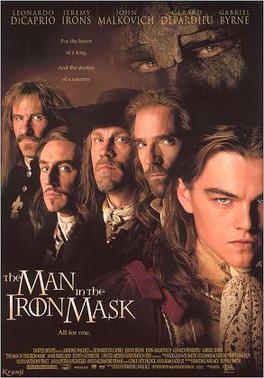
The 17th century in France was an era of opulent monarchs, grand palaces, and whispered secrets. At the heart of one of its most enduring mysteries lies the tale of a prisoner, an unknown man whose face was forever hidden behind a formidable iron mask. For centuries, this enigmatic figure has fueled imaginations, inspired countless books, and become the subject of popular film adaptations, often prompting searches for "Manden Med Jernmasken IMDb" to delve deeper into its dramatic portrayals. But what is the true story behind this legendary figure, and how much of what we think we know is merely captivating fiction?
The Enduring Enigma: Who Was the Man in the Iron Mask?
Deep within the grim confines of a 17th-century French prison, a man was held captive for many years. Unlike other inmates, his identity was a closely guarded secret, sealed not just by stone walls but by a heavy iron mask, reportedly welded onto him. No one knew who he was; perhaps not even the prisoner himself, stripped of his past and his very name. This chilling image, a symbol of absolute power and hidden royal intrigue, has become synonymous with the reign of King Louis XIV, often known as the Sun King.
The mystery of the Man in the Iron Mask captivated the French public and, eventually, the world. It was a story tailor-made for speculation, ripe with potential for grand conspiracies and tragic fates. While history offers tantalizing clues and multiple theories, the most popular and enduring narrative, popularized by literary giants and Hollywood alike, paints a dramatic picture. This version posits that the prisoner was none other than Philippe, the twin brother of King Louis XIV. According to this compelling theory, Philippe was the legitimate heir, unjustly imprisoned by his ruthless sibling, King Louis XIV, who sought to consolidate his absolute power and was, in this telling, leading France towards ruin.
The existence of such a prisoner, held under extraordinary conditions, speaks volumes about the political climate of the time. Louis XIV's France was a nation where the monarch's will was law, where dissent was swiftly crushed, and where secrets, particularly those concerning the royal bloodline, could destabilize an entire empire. The very notion of a hidden royal twin suggests a profound vulnerability within the seemingly invincible monarchy, a crack in the foundation that powerful figures might exploit. This deep-seated fear of usurpation and the protection of the legitimate line undoubtedly contributed to the elaborate precautions surrounding the masked prisoner.
From History to Hollywood: The Popular Narrative Unpacked
The dramatic narrative of Philippe, the rightful heir, imprisoned by his tyrannical twin King Louis XIV, has become the definitive storyline for many. This version, famously adapted into films, presents a thrilling adventure where the fate of France hangs in the balance. In this compelling retelling, the country’s Interior Minister, recognizing the king's destructive path, takes a desperate measure. He tasks the valiant captain of the Musketeers, D'Artagnan, with an impossible mission: to liberate Philippe and replace the corrupt King Louis XIV with his benevolent twin, all without arousing suspicion.
This audacious plan, however, is fraught with peril. It demands not only the utmost secrecy but also the unwavering loyalty and cunning of D'Artagnan's legendary musketeer friends. The stage is set for an epic adventure, filled with daring escapes, intricate subterfuge, and profound moral dilemmas. This storyline, while thrilling, largely deviates from historical fact, yet it resonates deeply due to its themes of justice, identity, and the struggle against tyranny. It's a testament to the power of storytelling that this particular interpretation of the "Man in the Iron Mask" has become so ingrained in popular culture, often explored in detail when people search for "Manden Med Jernmasken IMDb" to relive its cinematic glory.
Film adaptations, like the widely recognized 1998 movie, brilliantly bring this adventure to life, exploring the bonds of friendship among the Musketeers and the moral weight of their extraordinary undertaking. For a deeper dive into the Musketeers' pivotal role and D'Artagnan's courageous efforts, explore D'Artagnan and the Iron Mask: A Musketeer's Royal Adventure. These cinematic ventures often enhance the dramatic elements, portraying Louis XIV as an excessively cruel monarch and Philippe as his virtuous counterpart, making the quest for justice all the more poignant. This popular narrative offers not just entertainment, but a powerful commentary on leadership, sacrifice, and the fight for what is right, even in the face of overwhelming odds.
Unmasking the Theories: The Real Historical Candidates
While the twin-brother narrative makes for gripping drama, the historical truth behind the Man in the Iron Mask is far more complex and elusive. The real prisoner, whose identity remains one of history's greatest cold cases, was indeed held under incredible secrecy, though the details often differ from the fictionalized accounts. Records confirm the existence of a prisoner referred to as "Eustache Dauger," first imprisoned in the late 1660s, who was always kept isolated and consistently wore a mask. However, this mask was likely made of black velvet, not heavy iron, which would have been impractical for long-term wear, though perhaps a more intimidating metal mask was used for transfers or in very specific circumstances to maintain absolute anonymity.
Historians have proposed numerous candidates for Dauger's true identity, each with compelling arguments but no definitive proof. Among the most prominent theories are:
- Eustache Dauger de Cavoye: A valet or disgraced nobleman, whose knowledge of a scandal or state secret warranted his lifetime imprisonment and silence. This is the most historically plausible, as a man named Eustache Dauger is documented in prison registers.
- Nicolas Fouquet: Louis XIV's former Minister of Finance, who was imprisoned for embezzlement. While Fouquet was certainly a high-profile prisoner, he died in prison long before the Man in the Iron Mask's recognized demise, and there's little to suggest he wore a mask.
- A Natural Son of Anne of Austria: Queen Anne, Louis XIV's mother, was rumored to have had an affair, leading to a secret illegitimate child. This theory positions the masked man as a half-brother to Louis XIV, whose existence could have threatened the legitimacy of the throne.
- A Natural Son of Louis XIV: Less commonly, it's been suggested the prisoner was an illegitimate son of Louis XIV himself, whose existence could have created political complications.
What remains consistent across historical accounts is the extreme security measures surrounding the prisoner. He was always accompanied by guards, instructed to kill him if he ever attempted to reveal his identity. His cells were meticulously searched, and any written materials he possessed were confiscated. This level of precaution suggests that the man was not just a common criminal, but someone whose very existence or knowledge posed a grave threat to the state or the monarchy. The historical evidence, while fascinating, always leads to more questions than answers, highlighting the masterful way Louis XIV's administration could bury secrets. For those interested in the layers of historical intrigue, understanding the various theories is crucial to appreciating the full scope of this fascinating mystery. You can delve further into the political implications and historical context in The Man in the Iron Mask: Unraveling the Royal Conspiracy.
Beyond the Mask: Themes and Legacy in Literature and Film
The enduring power of the Man in the Iron Mask lies not just in the historical enigma but in its potent symbolism. It speaks to universal themes of identity, injustice, the corrupting influence of power, and the yearning for freedom. Alexandre Dumas père, with his novel The Vicomte de Bragelonne (the final installment of his D'Artagnan Romances), cemented the "twin brother" theory in popular consciousness. Dumas masterfully wove together historical fragments with rich imagination, transforming a shadowy historical figure into an icon of literary adventure.
The story has continued to captivate across mediums, inspiring stage plays, operas, and numerous film adaptations. Each rendition offers a fresh lens through which to view the mystery, often reflecting the anxieties and values of its own time. From swashbuckling adventures to more psychological thrillers, filmmakers have explored various aspects:
- The Nature of Kingship: Many adaptations use the twin dynamic to explore the dichotomy between a benevolent ruler and a tyrannical one, questioning the very essence of legitimate power.
- The Price of Secrecy: The constant concealment and the emotional toll on the masked man, his guards, and those privy to the secret are often central themes.
- Justice and Revenge: The desire to right historical wrongs and bring down an unjust regime frequently drives the plot, particularly in the D'Artagnan-centric versions.
For audiences searching "Manden Med Jernmasken IMDb," they are often seeking details on these cinematic interpretations, eager to compare plot points, cast performances, and the historical liberties taken. These adaptations serve as powerful gateways into 17th-century France, inviting viewers to ponder what if the fiction were true, and what it would mean for history. They demonstrate that some stories, no matter how old or historically ambiguous, possess an innate magic that transcends generations, making them eternally relevant.
Conclusion
The Man in the Iron Mask remains one of history's most compelling unsolved mysteries, a tale that bridges the gap between verified fact and tantalizing fiction. Whether viewed through the lens of history, seeking the true identity of Eustache Dauger, or through the dramatic narratives popularized by Alexandre Dumas and Hollywood, the story continues to fascinate. It is a powerful reminder of 17th-century France's absolute monarchy, its political intrigues, and the lengths to which power could be protected or subverted. The allure of a hidden royal twin, the heroism of D'Artagnan and his Musketeers, and the tragic fate of a man whose face was sealed by an iron mask combine to create a legend that transcends time, ensuring that the secrets of this enigmatic prisoner will continue to be debated, imagined, and revealed in new forms for centuries to come.